
Stories and guides
Around Town
Local guides, history, and practical notes about living in and visiting Boulder Creek.
The Big Basin Evacuation: Three Days in August 2020
On August 18, 2020, a small ranger team evacuated more than a thousand campers from Big Basin as the CZU fire closed in. The story of how everyone got out.
The Day the Last Train Left Boulder Creek
On January 26, 1934, the last train left Boulder Creek, ending 49 years of rail. The slow wind-down before it, and what a visitor can still trace downtown.
Riding the Flume: The Most Dangerous Fun Boulder Creek Ever Invented
In the 1870s locals rode makeshift boats down Boulder Creek's nine-mile lumber flume and walked its ten-inch planks. The stories, the diary entries, and the men who patrolled it.
Lorenzo: The Town Boulder Creek Swallowed
A mile south of Boulder Creek stood Lorenzo, a rival village with its own mill, hotel, and flume station. How the railroad's 1885 choice decided which town won.
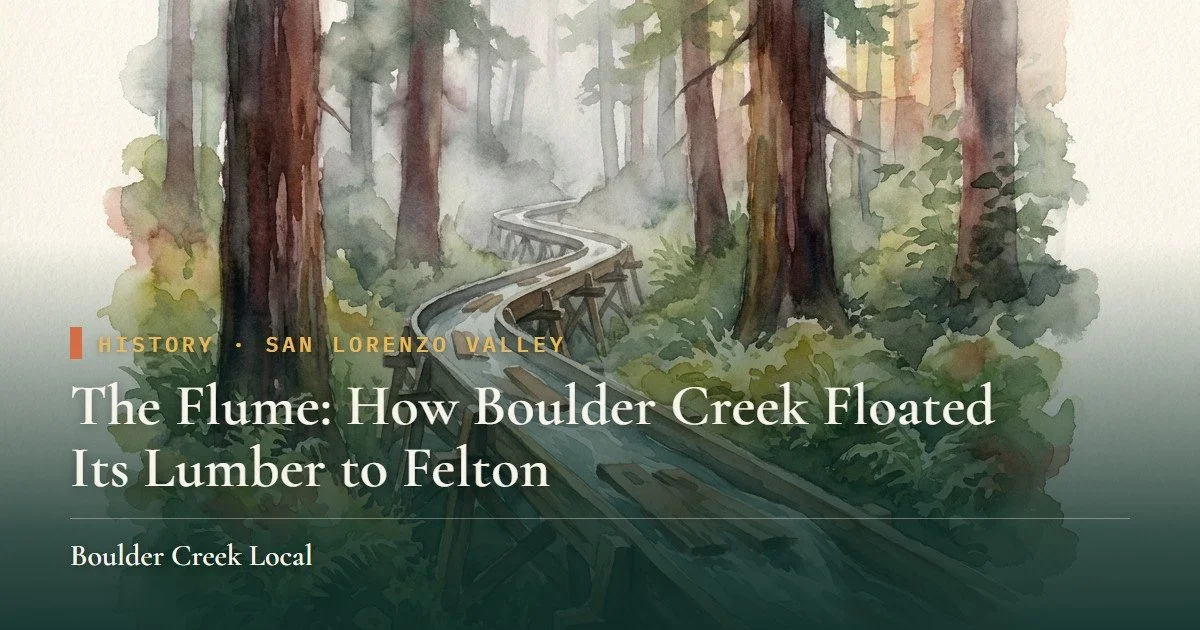
The Flume: How Boulder Creek Floated Its Lumber to Felton
For a decade a wooden trough floated Boulder Creek's lumber twelve miles to Felton. On one day in 1881 it moved 116,400 feet in under nine hours.
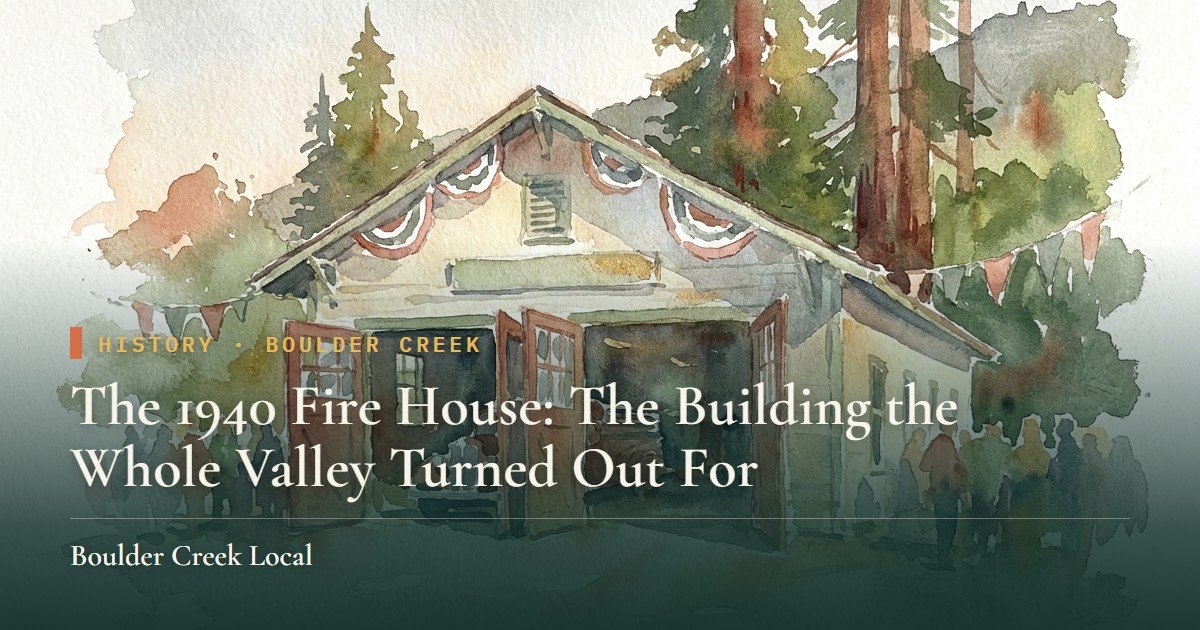
The 1940 Fire House: The Building the Whole Valley Turned Out For
A crowd of 4,000, a 50-float parade, and a $13,000 building. How Boulder Creek dedicated its fire house in May 1940, and who built it.
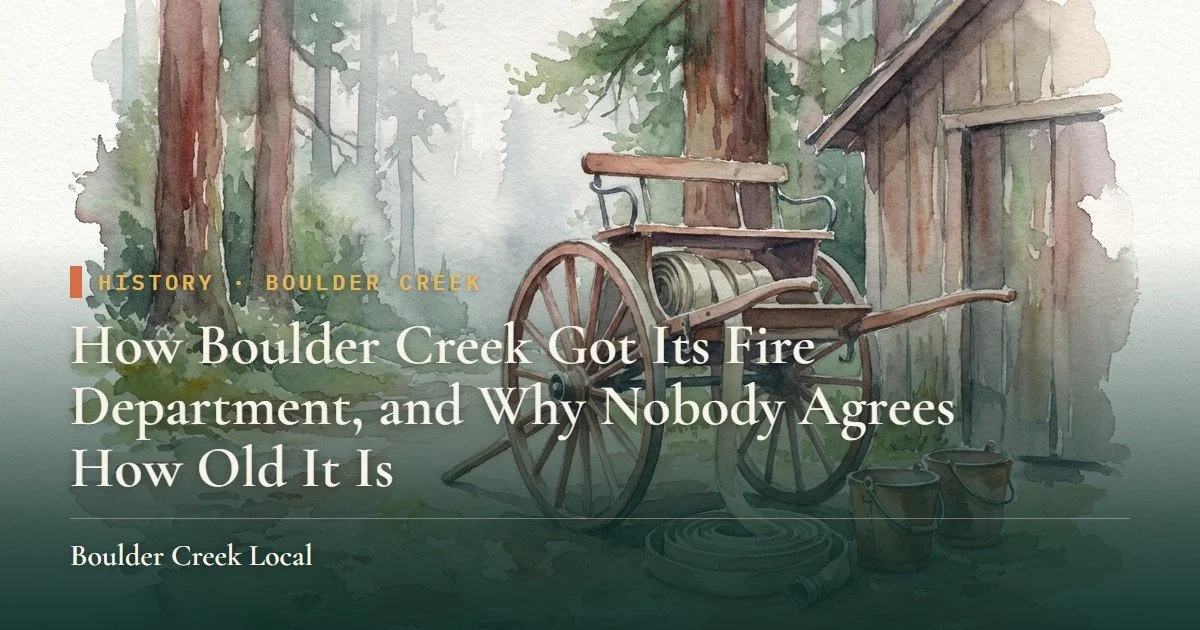
How Boulder Creek Got Its Fire Department, and Why Nobody Agrees How Old It Is
BCVFD dates itself to 1892. Other records say 1894, and 1931. All three are defensible, and the evidence explains why. The documented lineage.
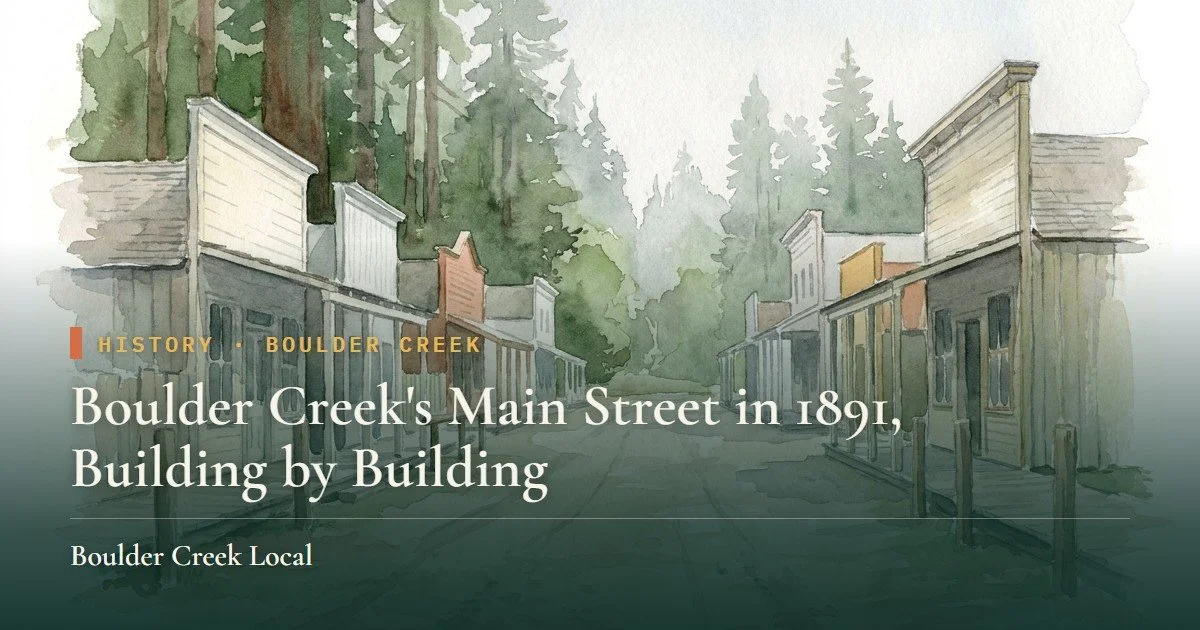
Boulder Creek's Main Street in 1891, Building by Building
A newspaper's list of what burned in 1891 is the most complete picture of downtown Boulder Creek before the Sanborn maps. Here is the street, in order.
How Boulder Creek Got Its Name and Who Was Here First
The town takes its name from the stream that comes off Ben Lomond mountain and meets the San Lorenzo River at the north end of town. This tells how the creek got its name, who lived in the valley long before settlers, why a rival settlement called Lorenzo nearly won out, and how the railroad finally made the name Boulder Creek permanent.
The Night Boulder Creek Burned: July 16, 1891
On July 16, 1891, fire destroyed every building but one in Boulder Creek's two central blocks. The contemporary newspaper record, block by block.
The San Lorenzo Valley Museum: What to See and How to Support It
The San Lorenzo Valley Museum is free, and it's open more often than most people think. This covers both gallery spaces in former churches, including the main Grace Episcopal Gallery at 12547 Highway 9, what's on in 2026, and the archives behind the scenes. It also lays out simple ways to support a museum the historical society has run for fifty years.
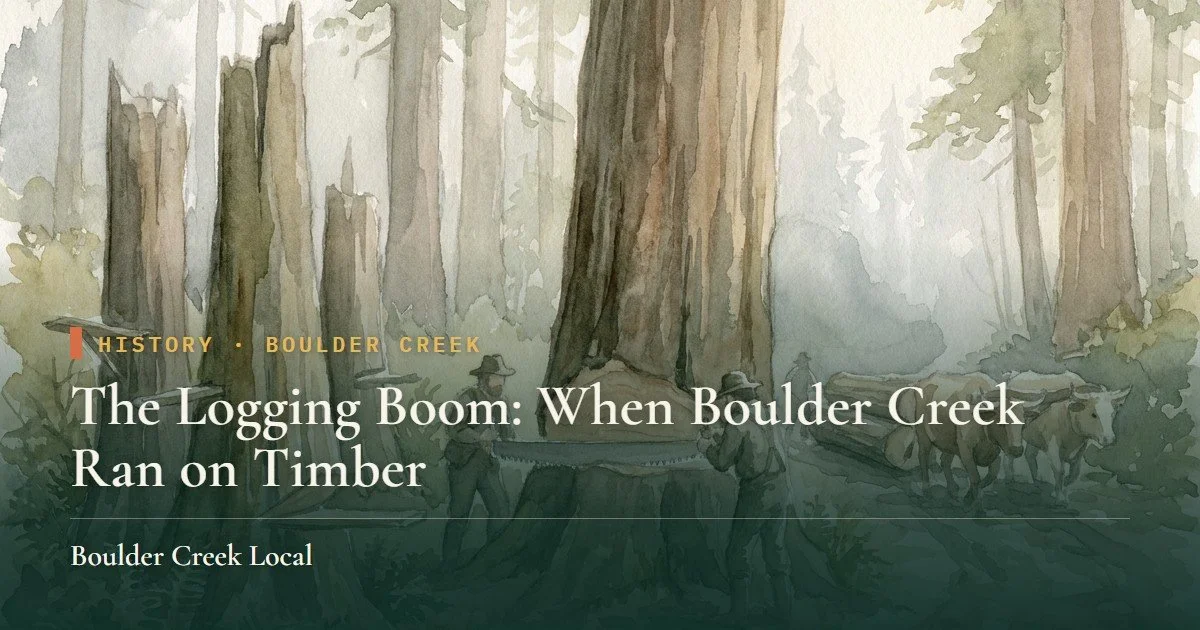
The Logging Boom: When Boulder Creek Ran on Timber
For about fifty years, Boulder Creek existed to cut redwood and move it out of the mountains. This traces the logging era from the first upper-river mills through the flume years and the 1885-to-1915 boom to the moment the big trees ran out, drawing on rail historian Derek Whaley's research, then closes with the stands that were saved and what you can still see today.
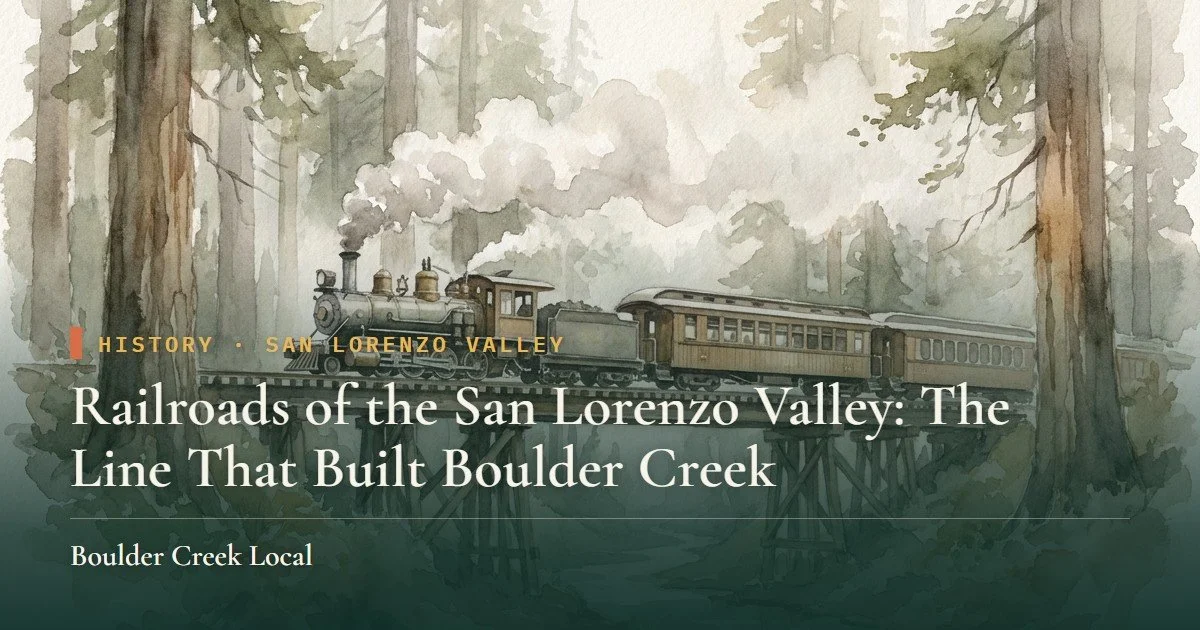
Railroads of the San Lorenzo Valley: The Line That Built Boulder Creek
Trains ran to Boulder Creek for just under fifty years, from April 1885 to January 1934, and much of the town you drive through today is what they built. This follows the narrow-gauge branch up the valley from Felton, the loggers' own Dougherty Extension, and the slow decline to the last train, then shows how to trace the old line on the ground now.
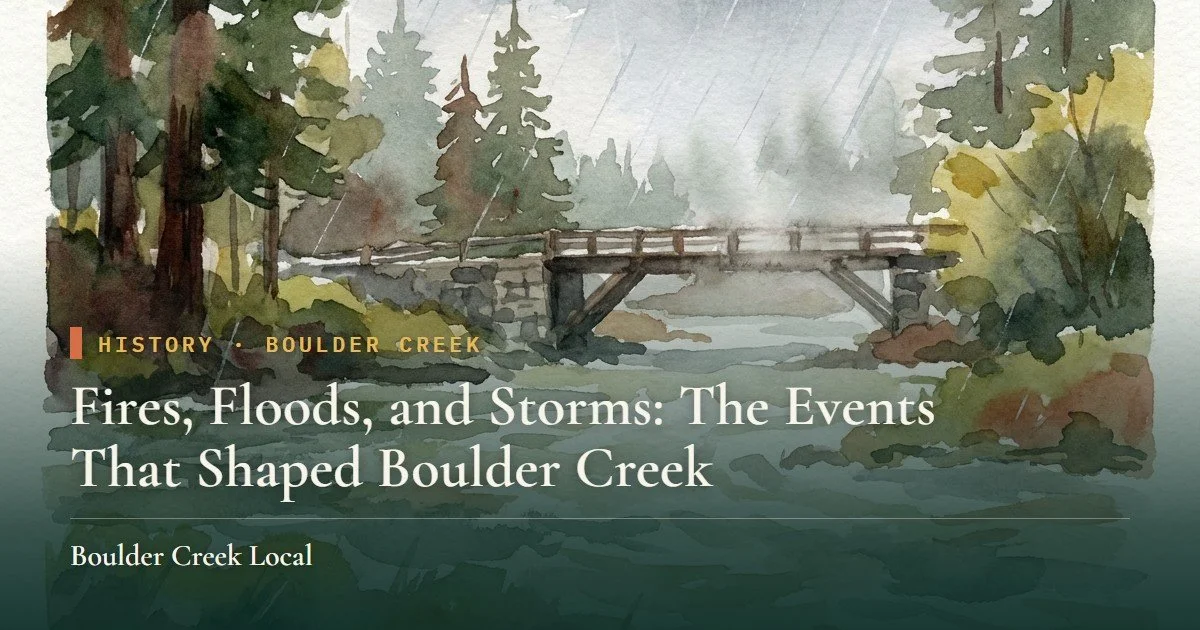
Fires, Floods, and Storms: The Events That Shaped Boulder Creek
If you've wondered why Boulder Creek neighbors talk about go-bags and river levels the way other towns talk about traffic, the record explains it. This walks through the valley's defining disasters, the 1955 Christmas flood, the 1982 storm and Love Creek slide, the 2020 CZU fire, and the 2023 atmospheric rivers on the burn scar, and what that history means for living here now.
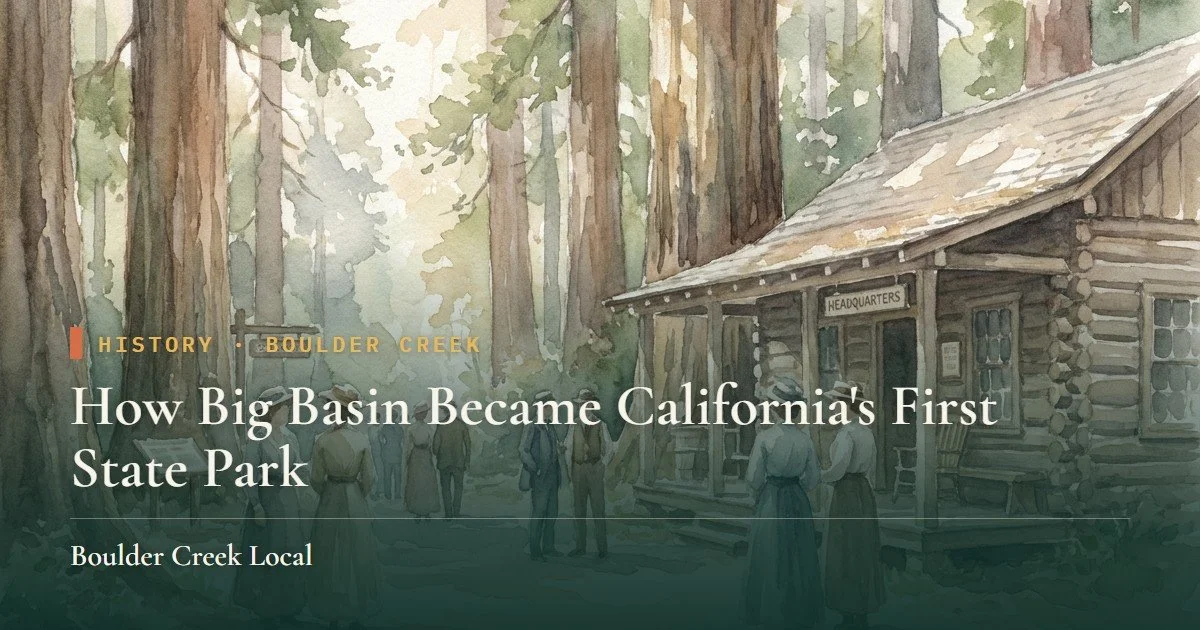
How Big Basin Became California's First State Park
Big Basin became California's first state park in 1902, after a two-year campaign by the Sempervirens Club, formed in the basin in 1900 to stop the last old-growth redwoods from being logged. This tells that origin story, from a photographer who wouldn't hand over his negatives to the thirty-two dollars that started it, and how Boulder Creek has been the gateway ever since.
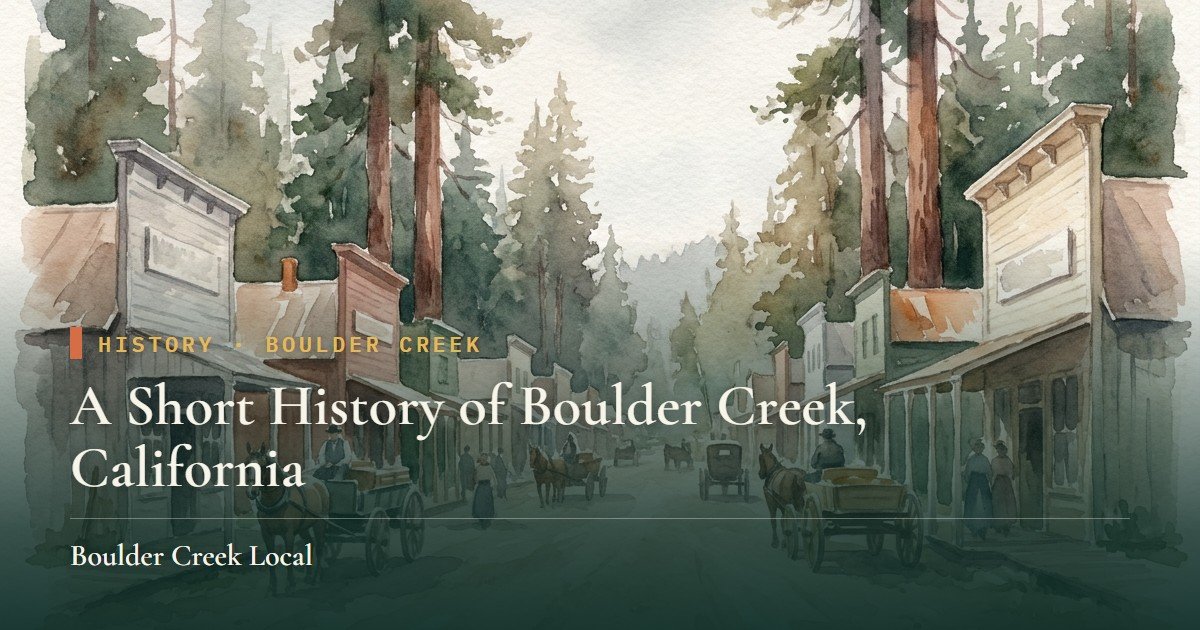
A Short History of Boulder Creek, California
Boulder Creek's story runs in three chapters: scattered sawmill settlements in the 1860s and 1870s, a rail-served lumber boomtown from 1885 to about 1915, and the quieter mountain town and Big Basin gateway it's been since. This short history moves through all three, from the valley's first people and a settlement called Lorenzo to the CZU fire and recovery, and where the town stands today.
What Is Boulder Creek Known For?
Boulder Creek is known as the gateway to Big Basin, a former lumber boomtown and railroad terminus, a silent-film location, and a town that voted to stop being a city.
Boulder Creek History Timeline: From Ancient Redwoods to Today
A dated timeline of Boulder Creek, California: sawmills, the flume, the railroad, Big Basin, the film era, cityhood and its end, floods, fire and recovery.
Famous People Who Lived in, Grew Up in or Visited Boulder Creek
Who's actually from Boulder Creek? A sourced directory separating people raised here, former residents, working visitors, and claims that don't hold up.
Every Movie, Short Film and Music Video Filmed in Boulder Creek
A sourced database of films, shorts and music videos shot in Boulder Creek and Big Basin, from 1914 silent westerns to Vertigo to a Rachel Platten video.